All You Need to Know About Road Safety Audit in India

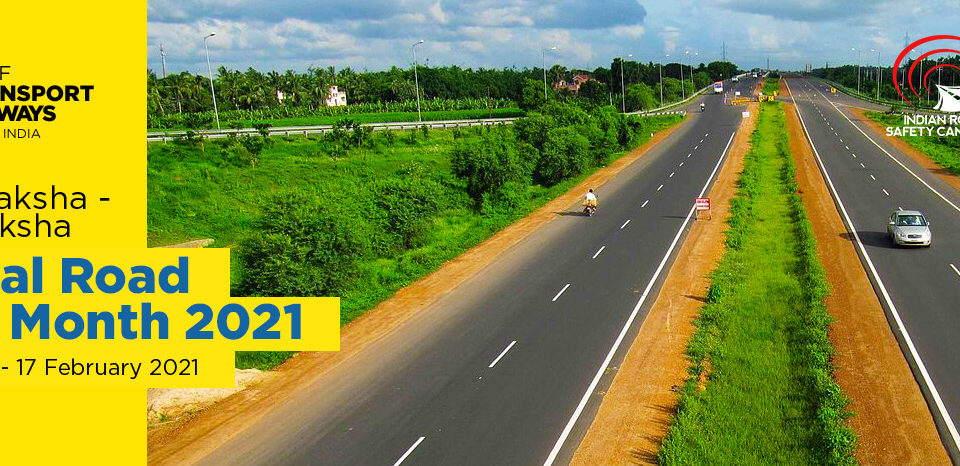
Road Safety Month 2021 Concludes with These Activities
19/02/2021
All You Need to Know About Road Safety Audit in India
By: Soudamini Mujumdar
In a recent event, Road Transport and Highways minister Nitin Gadkari said that road safety audit during different stages of development is the only way to reduce road accidents. This emphasis on Road Safety Audit (RSA) as a tool to tackle the menace of road accidents in India needs more attention and practice in India.
Mr. Nitin Gadkari also said that till now more than 4000km of highways have been brought under auditing. While highways are prone to accidents, the process of proper audit of roads is also needed in urban and rural roads in India.
What is Road Safety Audit?
Road Safety Audit is a process done by road safety experts on stretches of roads or junctions to identify blackspots, accident prone areas, reasons behind accidents or collisions, and to suggest structural changes which can help in making the spot safer for all road users. The idea is to minimize future road accidents and make the road stretch safer. A good road safety audit takes into account all road users including pedestrians, cyclists, non motorized vehicles as well as differently-abled persons.
India’s Road Safety Audit
In India, Road Safety Audit is being used since a long time to assess roads on the basis of their safety features for different categories of road users by different authorities such as central, state and district governments or administrative authorities. The Indian Road Congress in 2010 published a detailed manual on Road Safety Audit, highlighting the need to creating a ‘safety culture’ to manage accident in India and as a part of this ‘Safety Culture’ Road Safety Audit was seen as a part of an overall strategy to reduce accident risk.
An audit may also be conducted on an existing road, since it permits hazards to be identified and opportunity becomes available to identify preferred road engineering measures to improve safety.
Road Safety Audit Stages
The Indian Road Congress has laid down a detailed procedure for Road Safety Audit in India which is modified not only for different types of roads such as urban roads, highways, rural roads etc., but also encompasses roads which are at various stages of development. The Road Safety Audit is a comprehensive study which assesses the road safety infrastructure for different categories of road users such as vehicular traffic, non-motorized traffic, pedestrians etc. The IRC’s road safety audit has six stages. These six stages are:
- During Feasibility Study
- Completion of Preliminary Designs
- Completion of Detailed Design
- During Construction Stage
- Completion of construction – pre opening
- Audit on existing roads and during operations
Each of these stages have specific outcomes and recommendations which should be followed before proceeding to the next steps. Each stage has a checklist which is to be ran by to make the road safer.
Road Safety Audit and Public Participation
Concern for Roads and Pedestrian Safety envisions to make roads a safer shared social space through scientific interventions in the areas of education and engineering aligned with the global Safe Systems Approach. An important tool for engineering safety of roads in India is the road safety audit which CoRPS carries out along with the public in accident black spots in cities.
This road safety audit designed by CoRPS specifically for city roads is an abridged version of the IRC’s road safety audit. On a broader scale, the parameters mapped in the Road Safety Audit formulated by CoRPS India are:
- Details of the road/ junction being surveyed
This includes basic information such as name of location, nature of location, accident history - Information About Road Stretch
This records information such as width and length of the road and if there is a flyover present near the site. - Information About Junction
If the spot being surveyed is a junction the following data is recorded the number of exits at the junction, presence of traffic lights, pedestrian islands, zebra crossings, occurrence of bottlenecks, bus stops at the junction etc. - Traffic Density
The number of pedestrians, two wheelers and four wheelers passing through the road/ junction per minute, potential for a two wheeler lane - Nature of Road
This covers quality aspects of road such as road quality, presence of curve on the road, visibility while driving on road, presence of traffic cps or wardens, vibrometer reading, gradient of the road from center to sides and presence of footpath/ pavement. - Footpath/ Pavement audit
This checks the quality, width and height of the footpath. - Locality around the black spot
Whether the road being audited is located in a residential zone or commercial or mixed zone, and the number of hoses or shops around the area and the walk length between two adjacent plots - Public Places
The presence of public amenities around the spot such as Hospital, Mall, Temple, School, College, Large Offices, Hotels, Restaurant - Public Transportation
This section covers traffic related aspects such as type of public transportation seen on the road, bus route numbers, number of buses per five minutes, presence of bus stops, width of road at bus stops etc. and also potential changes such as possibility of shifting bus stops at another location. - Lighting
This understands presence of proper lighting at the junction or the stretch such as presence of lights, and if there is place to add more lights - Signages
This section checks requirement of various important signs for the road/ junction such as speed breaker sign, stop sign, roads merging sign, School sign, one way sign, speed limit sign etc.
All these parameters help in assessing how safe the road is and also helps in gaining insights into how the road can be made safer. Do you know any road stretch around you which lacks these amenities and can be improved?
Then contact us today to take up the road safety audit for the spot. CoRPS India an provide the knowledge resources required for conducting a road safety audit of any place in urban zones.

Related posts